
Call about the water now
Call about water removal now and keep records as the work progresses. Say which rooms are wet, where the water appears to come from and when you first noticed it. Your technician checks the affected materials and records the drying plan. Keep dated photos and repair records with the drying plan.
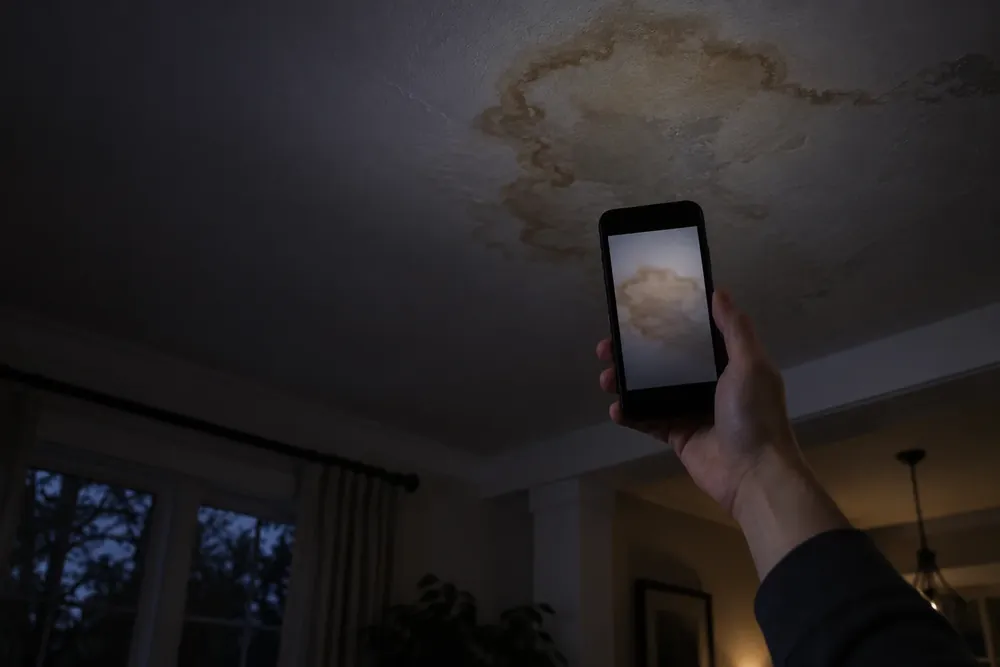
Photograph the room and the damage
Wide shots show where damage sits in the room; close-ups show individual stains, swelling and affected belongings. Photograph from a dry, safe position. Include a doorway or another fixed feature so each close-up has a clear location. Keep the original files and their dates. Avoid editing away waterlines or marks that show the condition.
Take another set as work progresses. Label folders by room and date. A photo of a ceiling stain records its appearance, but a photograph alone does not establish how much moisture remains behind drywall.
Keep moisture readings with their locations
Dated readings show moisture at the tested locations and how those measurements change during drying. Ask your technician to identify the room, material and measurement point in the log. A reading marked only with a number is harder to interpret later. Keep repeat readings together with any recorded drying targets and equipment changes.
Retain the written scope and receipts
A written scope sets out the affected areas and proposed extraction, material removal and drying work. Read the scope with your technician so the room names and tasks match what was discussed. Keep revisions as separate dated copies. For water damage restoration, insurance documentation should distinguish the proposed work from the completed work.
Use a short folder checklist:
- Original room photos and close-ups.
- Moisture logs with dates and measurement locations.
- Initial scope and dated changes.
- Itemized invoices and payment receipts.
- Leak repair notes and a timeline of your observations.
Record when you noticed the water and when work occurred. If a date is uncertain, label it as an estimate. Save receipts as they arrive, with a backup copy outside the wet room.
Keep repair records with dated observations
For water damage, home insurance records should include the observed water source and evidence of wet materials. Keep dated observations with photos and leak repair notes. Avoid presenting a new stain as proof that the underlying leak started that day.
For outside flooding, retain photos and dated notes about where you saw water. Keep repair records and restoration receipts with those observations. Label the records by room and date so photos, readings and repair notes stay organized.
For the drying sequence behind those records, read how long drying takes.