
Kent · Auburn · Renton · Federal Way · Puyallup
Wet Floors & Carpet in Kent, WA
Our local water damage professionals extract water from soaked carpet and assess wet flooring layers in Kent. Call about the room, the flooring type and any lifted seams; your technician checks the backing, boards and subfloor to explain what needs drying or removal.
- Calls answered 24/7
- Water removal and drying
- Serving Kent and nearby
Check each wet flooring layer
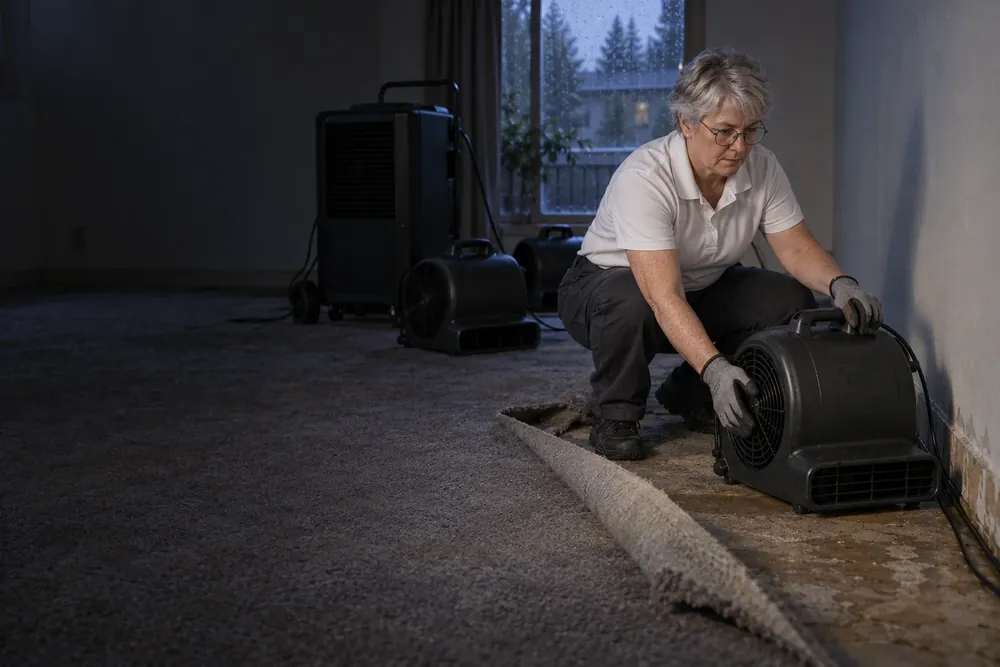
- Carpet and pad. Water extraction from carpet removes excess water, but the backing and pad need separate assessment; contaminated or damaged padding may need removal.
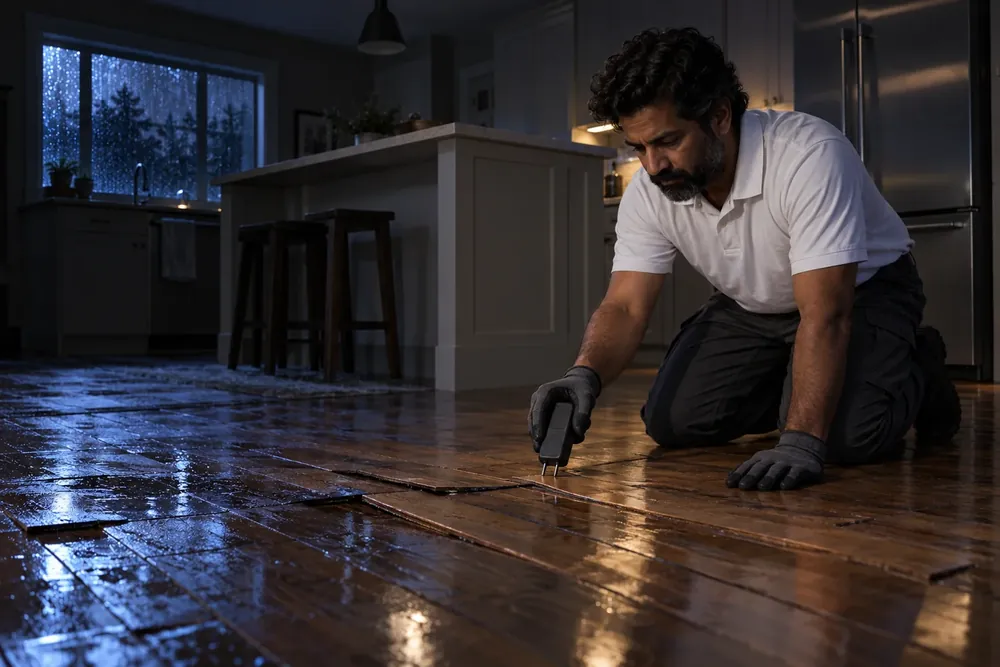
- Hardwood boards. Your technician checks raised board edges, moisture levels and the subfloor underneath; cupping signals moisture imbalance and needs assessment before refinishing.
- Laminate and vinyl plank. Swollen laminate may need replacement, while vinyl's condition depends on its construction and installation; water beneath either surface still needs attention.
- Tile and subfloor. Intact tile doesn't establish that the floor assembly is dry, so wet backing or subflooring is checked where accessible.
- Keep or remove. Sound flooring affected by clean water may be salvageable with prompt drying, while sewage-soaked carpet, badly swollen layers or materials that won't dry may need replacement.
Call when flooring changes after a leak
- Call when, after water damage, wood floor seams rise or boards start lifting.
- Carpet squishes underfoot or stays damp at the edges.
- Laminate joints swell, separate or lose their flat shape.
- Water appears beneath a floor covering after the surface is wiped.
- A soft spot develops near the leak, or the room below shows fresh staining.
Describe the floor and start the assessment
- Call about the wet floor. Give the address, the room and whether the water came from a plumbing leak, an appliance or outside.
- Your technician checks the floor covering and underlying layers. Water source, material condition and moisture readings guide decisions about extraction, lifting or removal.
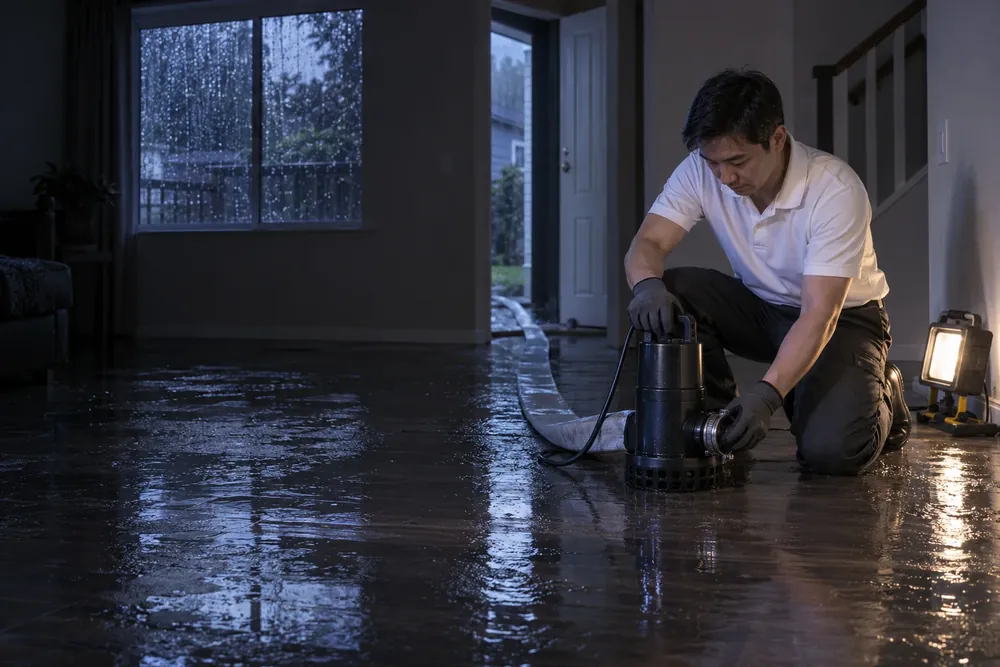
- Excess water is extracted, and accessible layers are dried. After water removal, carpet backing and the subfloor are checked rather than judging only the top surface.
- The floor is reassessed as drying progresses. Your technician explains which materials meet drying targets and what damage needs a separate repair or replacement plan.
Floor layers affect the cleanup cost
Flooring type, the soaked area, water contamination and access beneath the surface affect cleanup costs. Water removal from carpet involves different work from opening a glued floor to reach a wet subfloor. Padding disposal, equipment run time and replacement materials also change the scope.
Before any work starts, one of our local restoration partners sets out the floor assessment, proposed work and price. Ask where drying ends and water damage floor repair begins. Read the water damage cost breakdown for more on extraction, drying and rebuilding as separate parts of the total.
Understand what happens beneath your flooring
- Answer the call at any hour. Calls are answered 24/7, so describe the soaked carpet or changing floor when you find it.
- A local floor assessment. A technician serving Kent checks the affected layers and explains what the surface alone won't show.
- Work and price outlined. Discuss extraction, drying and material removal before the proposed work starts.
- Conditions put on record. Photographs, material readings and the written scope document the damage and drying work for insurance records.
Stay off unstable or contaminated floors
Keep people and pets away from lifted boards, soft flooring and water near electrical outlets. Call from an unaffected room. Close a leaking supply valve only from a safe position; switch off power only when the panel is reachable without entering water.
CDC electrical safety advice warns against operating appliances while standing in water. Don't use a regular household vacuum on wet carpet.
Treat floodwater or water from a sewage backup as contaminated. The CDC's floodwater precautions advise avoiding contact and keeping children out of affected water. Leave soaked flooring in place for assessment rather than pulling it up yourself.
Sources
Related water removal services
Areas we cover around Kent
Call about soaked flooring at your Kent or Sumner property; our local water damage professionals check the affected layers and explain the next work steps.
Wet floor and carpet questions
Does water damage on wood mean the floor needs replacing?
Wet wood doesn't always need replacement, but permanent damage, contamination and the condition beneath the boards matter. Moisture makes wood swell, which may raise board edges. Call about the leak and visible changes. Your technician checks the floor assembly before explaining whether drying or replacement fits the damage.
Can soaked carpet be saved after a pipe leak?
Carpet may be salvageable after a clean-water leak when its condition allows prompt extraction and thorough drying. The pad and backing need attention too, even if the surface feels better. Sewage contamination changes that assessment. Tell your technician where the water came from and how long the carpet stayed wet.
Do waterproof vinyl planks keep the subfloor dry?
A water-resistant plank surface doesn't establish that the subfloor stayed dry. Water may reach lower layers through edges, seams or surrounding openings. Your technician checks the installation and accessible moisture beneath it. Call about water that reached the floor, even when the planks look unchanged after wiping them down.
Why does carpet still feel wet after extraction?
Extraction removes excess water, but moisture may remain in the carpet backing, padding or subfloor. Those layers need drying and moisture checks suited to their condition. More vacuuming alone doesn't establish that the assembly is dry. Describe the damp area during the call so the assessment includes the layers underneath.
When can replacement flooring go over a wet subfloor?
Replacement flooring should wait until the subfloor meets the moisture requirements for the chosen material and installation. A dry-looking surface isn't enough to judge concealed moisture. Your technician records drying progress and explains remaining damage. The flooring installer then checks the installation requirements before covering the assessed subfloor again.
Call about soaked carpet or lifted floorboards, and say which room got wet and where the water started.
Call now(253) 330-8040